

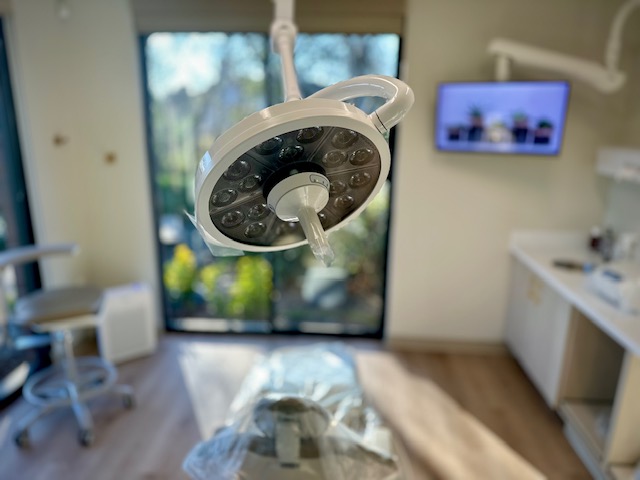
An oral exam is a comprehensive diagnostic evaluation of your teeth, gums, jaw, and soft tissues to identify oral health conditions before symptoms develop. While many people assume a quick look at their teeth is all that happens during a routine checkup, a full oral examination evaluates the entire oral cavity, underlying bone structure, and surrounding facial anatomy.
At Golden State Dental Co., our periodontal and surgical specialists provide detailed diagnostic assessments designed to preserve natural dentition and safeguard long-term health across our Sacramento, Folsom, and Roseville practices.
What is an Oral Exam? (And How Does It Differ From a Dental Exam?)
An oral health exam goes well beyond checking for surface cavities. It serves as an in-depth clinical screening of your mouth’s internal ecology, joint stability, and soft-tissue integrity.
Oral Exam vs. Dental Exam: Key Differences
Patients frequently search for dental exam vs oral exam to understand why diagnostic procedures vary in depth:
- Dental Exam: Traditionally focuses primarily on visible tooth surfaces, looking for signs of enamel decay, tartar buildup, or failing restorations.
- Oral Examination: Encompasses the entire masticatory system. A dental specialist evaluates periodontal pocket depths, the temporomandibular joint (TMJ), bite alignment (occlusion), the salivary glands, and lymph nodes, alongside dedicated oral cancer screenings.(Source)
| Diagnostic Scope | Standard Dental Exam | Comprehensive Oral Exam |
| Visible Teeth & Cavity Check | Yes | Yes |
| Periodontal Pocket Charting | Basic screening | Complete 6-point probing per tooth |
| Oral Cancer Soft-Tissue Screen | Sometimes visual only | Full visual and manual palpation |
| Airway, Bite & TMJ Evaluation | Limited | Comprehensive structural assessment |
| Bone Density & 3D Imaging | Standard bitewing X-rays | 3D CBCT scans & panoramic views |
The 3 Main Types of Oral Examinations
Dental practices categorize exams based on clinical codes and diagnostic intent:
- Comprehensive Oral Exam (D0150): Conducted during your first visit to a new practice or after several years without care. It establishes a complete baseline record of your oral and systemic health status.
- Periodic Oral Exam (D0120): Performed during routine six-month checkups for established patients to track changes against your baseline data.
- Limited / Emergency Oral Exam (D0140): Focused strictly on a single acute issue, such as localized infection, a chipped tooth, or acute jaw pain.
What to Expect During a Comprehensive Oral Exam
If you are scheduling your first visit, knowing what to expect during an oral exam removes any lingering uncertainty. The complete appointment typically involves six clear diagnostic steps:
1. Medical and Dental History Review
Your mouth does not exist in isolation. Your clinician reviews your current medications, past surgeries, systemic conditions (such as diabetes, cardiovascular disease, or autoimmune issues), and familial risks to contextualize your oral findings.
2. Digital Dental X-Rays & Imaging
Low-radiation digital radiographs and 3D Cone Beam Computed Tomography (CBCT) allow specialists to examine what lies beneath the surface: hidden interproximal decay, jawbone density, root morphology, and sinus positioning.
3. Tooth Evaluation and Cavity Screening
Each tooth is checked for structural integrity, worn margins, active enamel demineralization, and the condition of existing fillings, crowns, or implants.
4. Oral Cancer Screening
Your clinician systematically checks the tongue, throat, cheeks, palate, and neck for unexplained lesions, asymmetries, or color changes. Early detection during routine exams remains the single most effective tool against advanced oral pathologies.
5. Periodontal (Gum) Evaluation
Using a specialized millimeter probe, your specialist measures the space between your teeth and gums across six points on every tooth:
- Healthy measurements: 1 mm to 3 mm with firm, pink tissue and no bleeding.
- Early gum disease (Gingivitis): 3 mm to 4 mm with localized inflammation.
- Active Periodontitis: 5 mm or deeper with bleeding, indicating connective tissue detachment and bone loss.
6. Bite Analysis & TMJ Assessment
Your clinician evaluates your dental occlusion (how your upper and lower teeth meet) and monitors the temporomandibular joint for clicking, popping, or muscle tension related to clenching and grinding (bruxism).
Top Benefits of Getting Regular Oral Examinations
Scheduling routine diagnostic care delivers measurable health and financial advantages:
- Early Detection of Dental and Health Issues: Micro-cavities, hairline tooth fractures, and early periodontal pockets are addressed with non-invasive therapies before they progress into root canals, extractions, or bone loss.
- Understanding the Oral-Systemic Health Link: Chronic periodontal inflammation releases bacterial toxins into the bloodstream, which is clinically linked to increased risks of heart disease, uncontrolled blood sugar in diabetics, and arterial inflammation.
- Saving Money on Long-Term Dental Care: Catching an issue during a standard dental checkup prevents the financial stress of emergency surgical extractions, bone grafting, and complex full-arch reconstructions later.
How Often Should You Get an Oral Exam?
Most healthy adults should receive a periodic oral exam every six months.
However, patients managing active periodontal disease, individuals with dental implants, smokers, and diabetics typically require a recall schedule every three to four months. These frequent visits keep bacterial biofilms from reforming below the gumline and eroding bone support.
Frequently Asked Questions
Is a comprehensive oral exam painful?
No. An oral exam is a diagnostic evaluation, not a surgical procedure. While measuring deep periodontal pockets might cause temporary tenderness if gums are actively inflamed, the examination is gentle and non-invasive.
What is the difference between a dental cleaning and an oral exam?
A dental cleaning (prophylaxis) physically removes plaque and tartar from tooth surfaces. An oral exam is the clinical diagnosis and evaluation performed by the doctor to assess pathology, bone levels, and structural health. Cleanings and exams often happen during the same visit, but they serve distinct medical functions.
Does insurance cover comprehensive oral exams?
Most dental insurance policies cover a comprehensive exam (code D0150) or periodic exam (code D0120) at 100% as standard preventive care, subject to frequency limitations (typically once or twice per calendar year). Our billing specialists verify coverage details before your visit begins.
Schedule Your Comprehensive Oral Exam at Golden State Dental Co.
You do not need to wait for a toothache or bleeding gums to prioritize your oral wellness. If you are searching for a trusted dentist near me for oral exam or specialized care across Northern California, our experienced clinical team provides thoughtful, technology-driven evaluations tailored to your needs.
Contact Golden State Dental Co. today to reserve an appointment at our Sacramento, Folsom, or Roseville offices. Protect the foundation of your smile with proactive, specialist-led care.
Get More from Golden State Dental Co
Add us as a preferred source to see more of our content on Google Search.
