

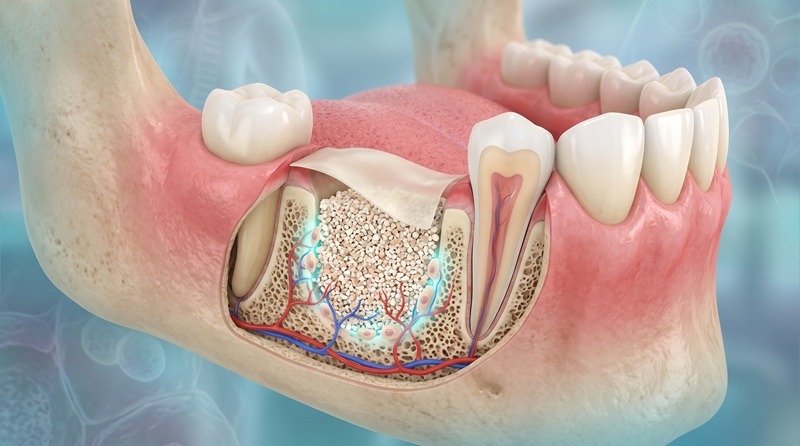
Dental bone regeneration and preservation are specialized surgical procedures that restore or maintain lost jawbone volume using biocompatible grafting materials and barrier membranes. Whether caused by tooth extraction, advanced gum disease, or long-term tooth loss, jawbone deterioration compromises both facial structure and the ability to place dental implants.
Most people think of bone as a rigid, permanent fixture—like concrete. In reality, your jawbone is living, dynamic tissue that constantly remodels itself in response to pressure. When you chew, the roots of your natural teeth send tiny mechanical signals into the surrounding bone, telling your body to keep that area strong and dense. When a tooth is lost or chronic gum infection sets in, those signals stop, and the bone quietly begins to melt away.
At Golden State Dental Co., our periodontal and surgical specialists help patients across Sacramento, Folsom, and Roseville halt bone resorption and rebuild a rock-solid foundation for lifelong oral health.
Why Does Jawbone Loss Happen in the First Place?
Understanding why bone disappears is the first step toward stopping it. In clinical practice, jawbone atrophy stems from four primary causes:
- Tooth Extractions: Within the first 12 months after a tooth is pulled without preservation, the surrounding alveolar ridge loses up to 25% to 50% of its width, shrinking both vertically and horizontally.
- Advanced Periodontitis: Chronic bacterial infections beneath the gumline release toxins and trigger an inflammatory response that dissolves the periodontal ligament and the supporting bone holding your teeth in place.
- Long-Term Missing Teeth or Dentures: Traditional removable dentures rest on top of the gums rather than inside the bone. Instead of stimulating the jaw, the constant friction accelerates bone shrinkage over time.
- Dental Trauma or Infection: Cracked roots, failed root canals, or deep cysts hollow out localized sections of the jawbone before a tooth ever comes out.
Bone Preservation vs. Bone Regeneration: What Is the Difference?
Bone preservation prevents bone loss immediately at the time of tooth extraction, whereas bone regeneration rebuilds bone volume that has already been lost to disease or time.
| Clinical Feature | Socket Preservation (Preventive) | Guided Bone Regeneration (Restorative) |
| Primary Goal | Stop the empty tooth socket from collapsing after removal | Rebuild lost vertical height or horizontal width in a thinned jaw |
| Timing | Performed during the exact same appointment as the tooth extraction | Performed months or years after tooth loss, or around failing teeth |
| Typical Complexity | Straightforward, minimally invasive outpatient care | Advanced microsurgery using membranes, biologics, and structural grafts |
| Healing Timeline | 3 to 4 months before dental implant placement | 4 to 9 months depending on the volume of bone being rebuilt |
4 Core Types of Bone Regeneration & Preservation Procedures
Depending on whether your goal is saving a natural tooth with periodontal therapy or preparing for dental implants, your specialist will tailor one of four regenerative protocols:
1. Socket Preservation (Alveolar Ridge Preservation)
Right after a damaged tooth is gently extracted, your surgeon packs the empty socket with bone grafting granules and seals it with a dissolvable collagen plug or membrane. This holds the natural contour of your gumline intact so the ridge doesn’t cave in while healing.
2. Guided Bone Regeneration (GBR)
When bone has already resorbed, soft gum tissue grows much faster than hard bone tissue. If left alone, fast-growing gum cells invade the empty space before bone cells have a chance to form. Guided Bone Regeneration (GBR) solves this by placing a specialized biocompatible barrier membrane over the bone graft. The membrane acts like a protective tent—blocking soft tissue out so your body’s bone-building cells (osteoblasts) can quietly fill in and harden the space undisturbed.
3. Periodontal Regeneration (Saving Natural Teeth)
Dental bone grafting isn’t only for implants; it is one of the most powerful tools we have to save natural teeth threatened by severe gum disease. During periodontal therapy, your periodontist gently cleans deep bacterial pockets along the root, places regenerative proteins or grafting matrix into the bone defect, and encourages your body to regrow the lost support structure around your own tooth.
4. Ridge Augmentation & Sinus Lifts
When teeth have been missing for years, the jaw ridge may become too narrow or shallow to house a titanium implant post. Ridge augmentation rebuilds the width and height of the jaw, while a sinus lift gently elevates the sinus floor in the upper back jaw to create deep, secure bone volume.
Where Does Dental Bone Graft Material Come From?
Modern dental bone grafting doesn’t require harvesting bone from your hip or ribs. Today’s regenerative materials act as a mineral scaffold that your own body eventually replaces with living, natural bone:
- Allograft (Human Donor Bone): Sterile, rigorously screened mineral bone sourced from certified tissue banks. It is the most widely used option because it requires no second surgical site and integrates seamlessly.
- Xenograft (Bovine Mineral Matrix): Naturally derived, biocompatible mineral scaffolding that holds volume exceptionally well over long healing periods, making it ideal for socket preservation and sinus grafts.
- Autograft (Your Own Bone): Bone cells collected directly from another spot in your jaw during the procedure, offering live bone-forming cells.
- Biologics & Growth Factors (PRF / Emdogain): We frequently pair grafts with Platelet-Rich Fibrin (PRF) spun from a small draw of your own blood. Concentrated platelets release natural growth factors that speed up gum healing and cut down post-op swelling.
What to Expect: Step-by-Step Procedure and Recovery Timeline
Hearing the phrase “bone surgery” sounds intimidating, but most patients tell us that a localized bone graft feels easier than having a simple tooth pulled.
- 3D CBCT Diagnostic Mapping: We capture a high-definition 3D scan to measure bone density down to the fraction of a millimeter and map nearby nerves and sinus cavities.
- Anesthesia & Sedation: The area is completely numbed with local anesthetic, and personalized sedation options (from nitrous oxide to IV sedation) are available so you stay relaxed.
- Graft & Membrane Placement: The graft matrix is gently contoured into the site and tucked beneath a protective barrier membrane with fine sutures.
Your Healing Roadmap:
- First 48–72 Hours: Expect mild swelling and minor tenderness around the site. Ice packs, keeping your head elevated, and prescribed anti-inflammatories keep you comfortable.
- Weeks 1–2: The surface gum tissue closes and heals. Stick to a soft diet on the opposite side of your mouth and avoid disturbing the area with your tongue or toothbrush. Occasionally, you may feel a few tiny, sand-like granules in your mouth—this is normal and nothing to worry about.
- Months 3–6 (Osseointegration): Beneath the healed gums, your blood vessels grow into the graft scaffold and replace it with dense, living bone ready to anchor a dental implant.
Frequently Asked Questions About Bone Regeneration
Is dental bone grafting painful?
No, the dental bone regeneration procedure itself is painless because it is performed under profound local anesthesia and optional sedation. Afterward, mild soreness feels similar to a routine tooth extraction and typically fades within three to four days with standard anti-inflammatory medication.
How long after bone regeneration can I get a dental implant?
Most patients are ready for dental implant placement 3 to 6 months after bone regeneration. Minor socket preservations often mature in 3 to 4 months, while larger ridge augmentations or sinus grafts may take 6 to 9 months to reach full structural density. In select cases with sufficient native stability, the implant and bone graft can be placed during the exact same visit.
What happens if I don’t get a bone graft after a tooth extraction?
Without socket preservation, the jawbone at the extraction site shrinks by up to 50% in width within the first year. This bone collapse can cause neighboring teeth to tilt into the gap, create an indentation in your gumline, and require more complex, costly ridge augmentation surgery if you decide to get a dental implant later.
Protect and Rebuild Your Smile at Golden State Dental Co.
Whether you need to prepare for a future dental implant, preserve your jaw after a tooth extraction, or save natural teeth affected by periodontal bone loss, proactive specialist care makes all the difference.
Contact Golden State Dental Co. today to schedule your comprehensive 3D CBCT evaluation and consultation at our Sacramento, Folsom, or Roseville offices. Let our surgical team build a lasting foundation for your smile.
Get More from Golden State Dental Co
Add us as a preferred source to see more of our content on Google Search.
