


Receding gums natural treatment options can effectively support gum health and potentially prevent further gum recession. By understanding the causes and exploring holistic remedies, individuals can adopt a comprehensive approach to oral care.
Key Factors Leading to Gum Recession
Receding gums occur when the gum tissue surrounding teeth pulls back, exposing more of the tooth or its root. This condition can be caused by several factors, including:
-
Incorrect Brushing Technique: Brushing too aggressively or using a hard-bristled toothbrush can wear away delicate gum tissue over time.
-
Periodontal Disease: A severe gum infection that damages soft tissue and destroys the alveolar bone supporting teeth, leading to accelerated gum recession.
-
Genetic Predispositions: Some individuals naturally possess thinner gum tissues, making them more vulnerable to recession.
Early Signs and Symptoms to Watch Out For
Early detection of gum recession is crucial for effective intervention. Key warning signs include:
-
Tooth Sensitivity: Often an initial indicator, as receding gums expose the sensitive roots of the teeth.
-
Visible Root Surfaces: Root structures become apparent, making teeth appear longer than normal. Addressing these symptoms promptly can prevent further structural damage.
7 Natural Remedies for Receding Gums at Home
If you are looking for home remedies and natural treatments to support gum health, consider these expert-backed options:
-
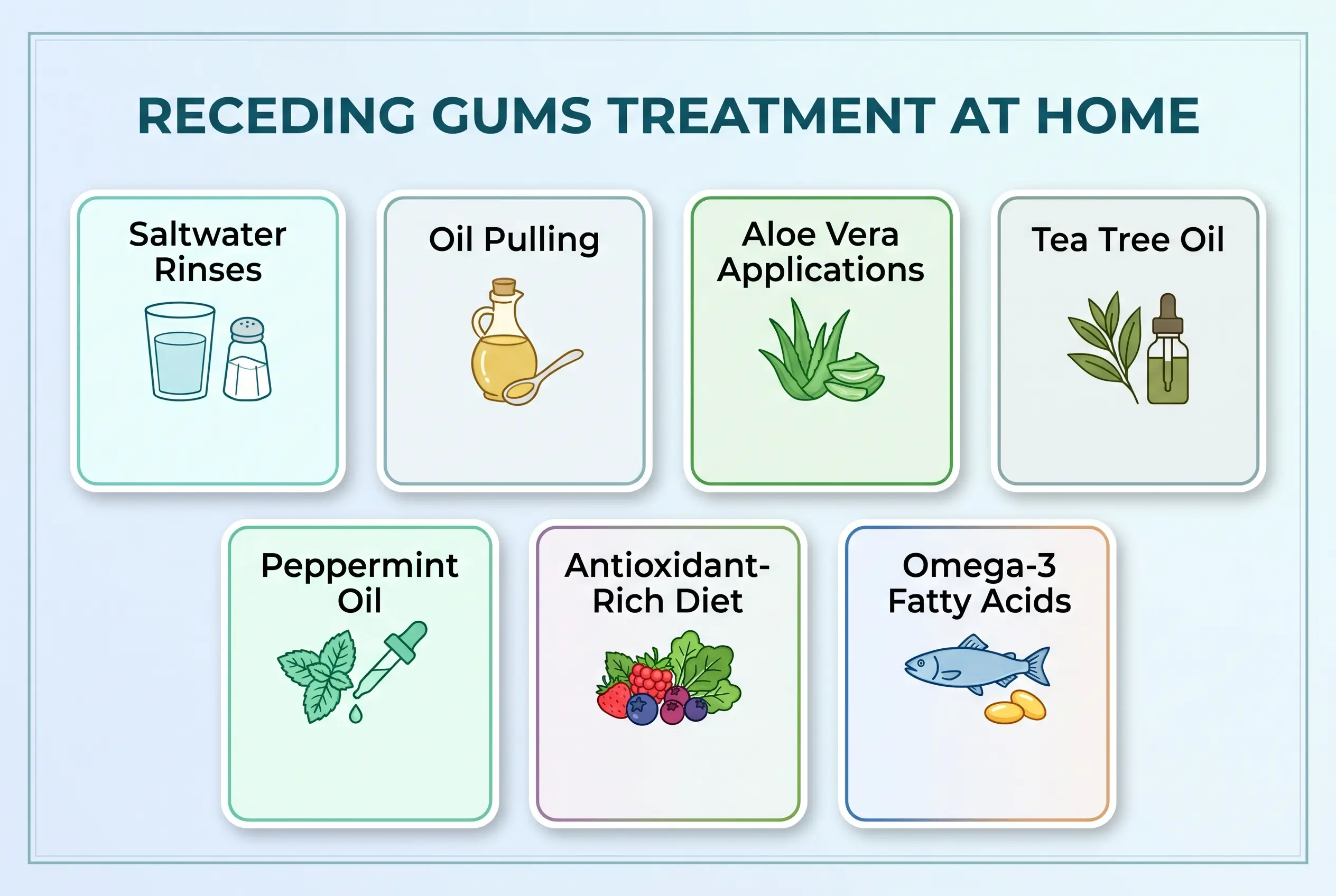
Saltwater Rinses: A simple yet effective method that helps reduce inflammation and neutralize harmful bacteria in the mouth.
-
Oil Pulling: An ancient practice involving swishing oil (commonly coconut or sesame) in the mouth, believed to reduce plaque and bacteria levels.
-
Aloe Vera Applications: Known for its powerful anti-inflammatory properties, aloe vera can soothe irritated gums and promote healing.
-
Tea Tree Oil: Possesses natural anti-inflammatory and antibacterial properties that help reduce gum swelling and combat oral bacteria.
-
Peppermint Oil: Offers antiseptic and cooling effects, providing instant relief from gum irritation.
-
Antioxidant-Rich Diet: Consuming fruits and vegetables such as berries, leafy greens, and citrus fruits enhances the body’s ability to repair and regenerate gum tissue.
-
Omega-3 Fatty Acids: Foods like fish and flaxseeds contain anti-inflammatory properties that strongly support overall gum health.

Daily Habits for Optimal Gum Care at Home
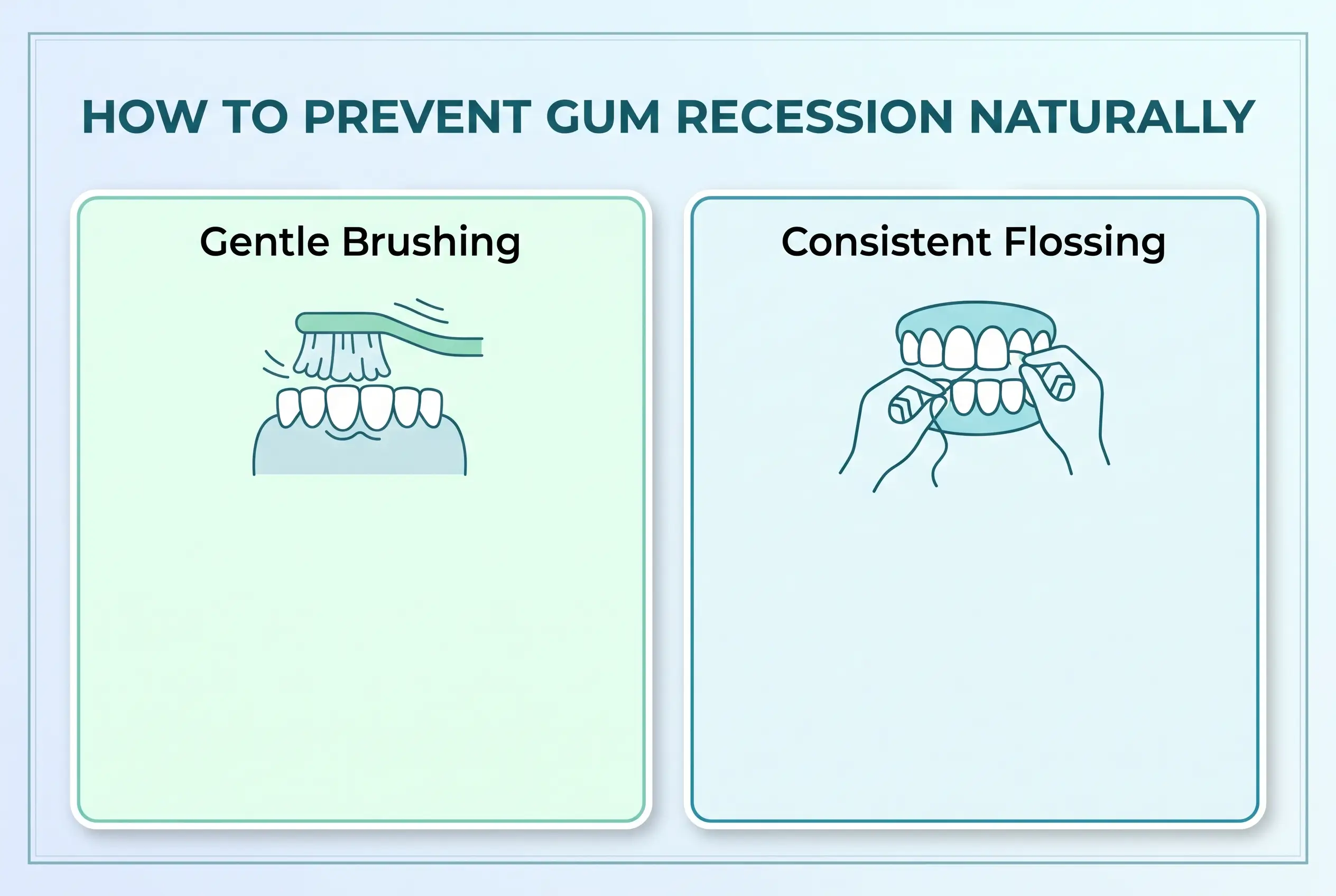
Adopting proper daily habits is essential for a successful natural treatment plan:
-
Gentle Brushing: Use a soft-bristled toothbrush and gentle circular motions to protect against tissue damage.
-
Consistent Flossing: Removes trapped food particles and plaque from between teeth and directly along the gum line.
When to Seek Professional Holistic Dental Care
While natural remedies can significantly support oral wellness, understanding when to seek professional assistance is crucial. Holistic dental treatments focus on treating the whole person rather than just masking symptoms. Regular dental check-ups are vital for early detection, allowing professionals to manage gum issues before severe complications arise.
Frequently Asked Questions
1. What are the best natural treatments for receding gums?
Saltwater rinses, oil pulling, and aloe vera applications are highly recommended for their anti-inflammatory, soothing, and antibacterial properties.
2. Can you regrow receding gums naturally?
Once gum tissue has receded or been destroyed, it cannot naturally regenerate on its own. However, natural treatments and proper care can halt further recession and protect the underlying roots.
3. How can diet impact gum health?
Consuming antioxidant-rich fruits and vegetables, alongside Omega-3 fatty acids, supports gum tissue maintenance and reduces systemic inflammation.
4. When should I consider professional dental care for gum recession?
If home remedies do not alleviate sensitivity or if gum recession is progressing rapidly, seeking professional care is advised.
5. What daily habits prevent receding gums?
Proper brushing techniques with soft brushes, daily flossing, and routine dental check-ups are essential preventive practices.
