

When we think about a beautiful smile, we often focus on pearly white teeth. However, the true unsung hero of your oral health is your gums. Healthy gums act as the essential foundation holding your teeth in place and shielding your jawbone from harmful bacteria.
Ignoring gum care can have serious consequences, transitioning from minor inflammation to permanent bone and tooth loss. In this complete guide, we will explore why maintaining healthy gums matters, how to optimize your daily routine, and when it is time to seek advanced professional care.
Why Gum Care Matters More Than You Think
The Connection Between Gum Health and Systemic Health
Your mouth is a gateway to the rest of your body. Clinical research supported by the Centers for Disease Control and Prevention (CDC) reveals a strong correlation between periodontal (gum) disease and serious systemic health conditions. Chronic inflammation in the gums allows bacteria to enter the bloodstream, which can exacerbate or increase the risk of heart disease, diabetes, stroke, and even respiratory issues. Taking care of your gums is a vital component of protecting your overall physical health.
Protecting the Foundations of Your Teeth
Just like a house needs solid ground, your teeth need a secure environment. Strong gum tissue hugs the neck of each tooth, blocking bacteria from reaching the delicate roots and supporting bone structure. When gum health declines, this seal breaks, causing the underlying support to erode.
How to Keep Gums Healthy: Your Daily Action Plan
Learning how to keep gums healthy involves moving beyond just quick brushing. A dedicated daily routine is your best defense for gum disease prevention.
Master the Art of Flossing
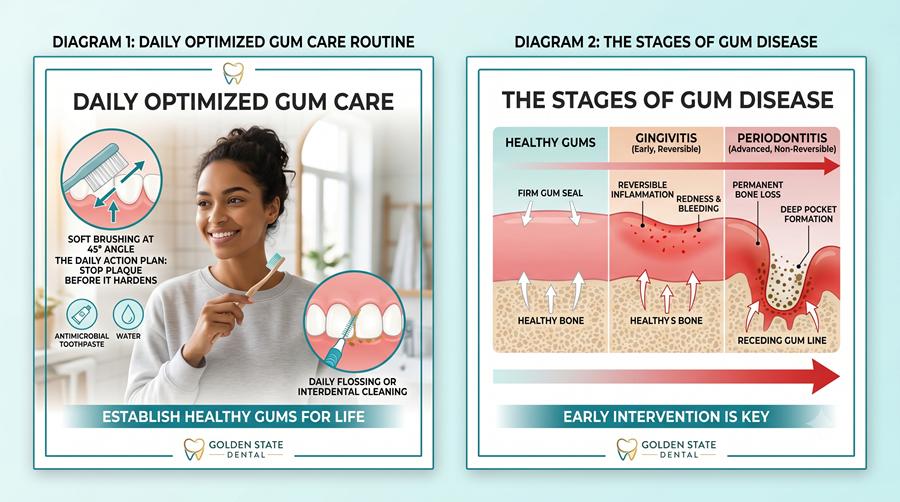
Brushing alone misses nearly 35% of your tooth surfaces—specifically the tight spaces between teeth where food debris and plaque accumulate. Flossing once a day removes this hidden plaque before it hardens into calculus (tartar), significantly reducing your risk of gingivitis.
Brush Right, Not Just Hard
Many patients mistakenly believe that scrubbing their teeth aggressively means a cleaner mouth. In reality, hard brushing irritates and pushes back the delicate gum margin. Always use a soft-bristled toothbrush and hold it at a 45-degree angle toward the gum line, moving it in gentle, circular motions.
Choose the Right Toothpaste and Mouthwash
Incorporate an antimicrobial or fluoridated toothpaste explicitly formulated for gum health. Pair it with a therapeutic, alcohol-free mouthwash to help flush out remaining bacteria without drying out your oral tissues.
Stay Hydrated and Eat a Gum-Friendly Diet
Drinking plenty of water stimulates saliva production, which naturally washes away acids and food particles. Additionally, as noted by the National Institute on Aging (NIA), nutrition plays a key role in oral health as we age; eating a diet rich in Vitamin C (citrus, leafy greens) and lean proteins helps rebuild and repair sensitive gum tissues.
Recognizing the Warning Signs of Gum Disease
Gum disease is often a silent condition, starting without any pain or obvious discomfort. Recognizing the early red flags can save your smile.
Gingivitis vs. Periodontitis: What’s the Difference?
- Gingivitis: The early, reversible stage of gum disease characterized by mild inflammation, redness, and occasional bleeding during flossing.
- Periodontitis: The advanced, destructive stage. If gingivitis is left untreated, the inflammation spreads deeper, creating infected “pockets” between the teeth and gums, leading to permanent bone loss and receding gums.
Red Flags You Shouldn’t Ignore
- Bleeding Gums: Gums bleeding during normal brushing or flossing is never normal. It is a direct sign of active bacterial inflammation.
- Chronic Bad Breath (Halitosis): Persistent bad breath or a metallic taste in your mouth often indicates hidden bacterial colonies thriving below the gum line.
- Receding Gums: If your teeth suddenly look longer or feel highly sensitive to hot and cold, your gum line may be backing away from the root.
When Home Care Isn’t Enough: Seeking a Gum Specialist
The Role of Routine Dental Cleanings
Once plaque hardens into tartar (calculus), it becomes physically impossible to remove with a toothbrush or floss at home. Routine professional cleanings are mandatory because dental hygienists utilize specialized ultrasonic scaling instruments to safely scrape away tartar, halting gum irritation before it advances.
When to See a Periodontist in Sacramento?
If you exhibit signs of advanced periodontitis—such as deep gum pockets, loose teeth, or severe tissue recession—home remedies and standard cleanings are no longer sufficient. This is when you should consult an expert Periodontist in Sacramento. A periodontist is a dedicated gum specialist who focuses entirely on diagnosing and treating complex gum diseases and restoring damaged tissues.
Advanced Treatments: What to Expect from Periodontal Therapy
If you require professional intervention, modern periodontal therapy offers highly effective, comfortable solutions:
- Scaling and Root Planing (Deep Cleaning): A non-surgical procedure where plaque and tartar are meticulously cleaned from deep beneath the gum line, and the root surfaces are smoothed to help the gum tissue reattach firmly to the teeth.
- Laser Gum Therapy and Regenerative Procedures: Utilizing advanced, minimally invasive technology and specialized growth biomaterials, we can safely target deep bacterial pockets, eliminate infection, and stimulate natural bone and tissue regeneration without the need for traditional, painful cutting or sutures.
Take Action for Your Smile Today: Book Your Consultation
Caring for your gums is a critical, daily investment in your long-term health and self-confidence. Do not wait for severe pain, loose teeth, or heavy bleeding to take action. Early prevention and timely care are the keys to saving your teeth.
If you live in the Sacramento, Folsom, or Roseville areas and are concerned about your gum health, the expert team at Golden State Dental Co. is here to support you. We invite you to experience our compassionate, high-intent clinical care firsthand.
Click Here to Schedule Your Consultation Appointment Online Today
Frequently Asked Questions About Gum Care
Why do my gums bleed even though I brush regularly?
Bleeding gums are a direct symptom of inflammation, usually caused by plaque buildup that hasn’t been thoroughly removed from the gum line. It can also occur if you are brushing too aggressively or neglecting daily flossing. If bleeding persists for more than a week, it is recommended to see a dental professional for an evaluation.
How often should I get a professional gum checkup?
For most healthy individuals, a professional dental cleaning and gum exam every six months is ideal. However, if you have a history of periodontitis or genetic predispositions to gum disease, your periodontist may recommend specialized maintenance visits every three to four months to keep bacterial growth under control.
Can receding gums grow back naturally on their own?
No. Once gum tissue has receded and exposed the root of a tooth, it cannot grow back naturally. While early-stage recession can be stabilized through deep cleaning and habit changes, moderate to severe recession requires professional periodontal treatments or specialized grafting procedures to recover the exposed roots.
