

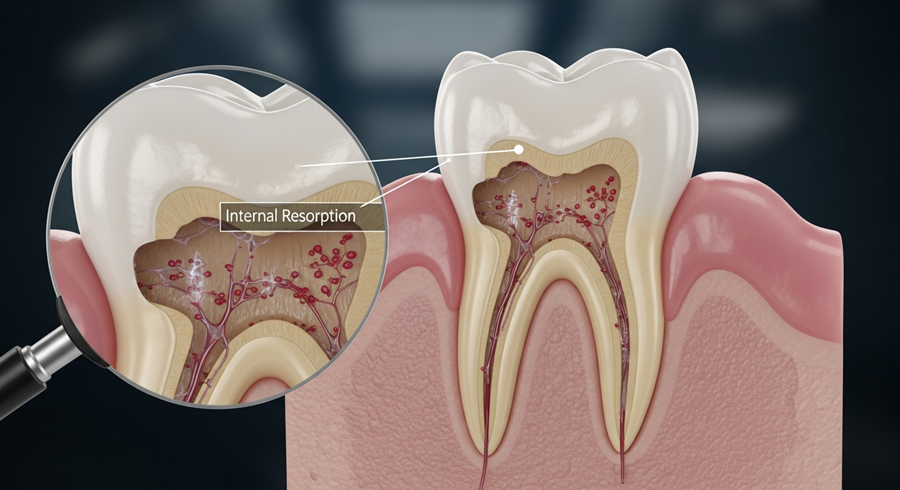
Tooth resorption is a progressive condition where the body’s own cellular mechanisms break down and absorb the internal or external structures of a tooth. Understanding what causes tooth resorption, recognizing early symptoms, and exploring modern clinical options are essential steps toward saving the tooth and preserving long-term oral health.
Types of Tooth Resorption: Internal vs. External
Tooth resorption is broadly classified by where the breakdown begins:
| Feature | Internal Tooth Resorption | External Tooth Resorption |
| Origin | Begins inside the tooth (pulp/root canal) | Begins on the outer root surface |
| Primary Cause | Chronic pulpitis, trauma, deep infection | Orthodontic force, trauma, periodontal disease |
| Early Signs | Often silent; may show a pinkish hue | Root sensitivity, minor mobility, gum swelling |
| Primary Treatment | Prompt root canal (endodontic therapy) | Surgical repair, periodontal care, or extraction |
1. Internal Resorption (Inflammatory)
Internal resorption begins within the root canal walls due to chronic pulp inflammation, trauma, or infection. Specialized cells called odontoclasts erode the surrounding dentin from the inside out. Early detection via 3D imaging or digital X-rays is critical; if caught early, endodontic therapy can halt the process before structural integrity is lost.
2. External Resorption (Replacement & Cervical)
External resorption starts on the exterior surface of the root and progresses inward.
-
Cervical Resorption: Occurs near the gumline and is often mistaken for a cavity.
-
Replacement Resorption (Ankylosis): Often triggered by severe trauma that destroys the periodontal ligament, causing the root to fuse directly to the surrounding jawbone. In these cases, comprehensive periodontal therapy is vital to manage surrounding tissues and safeguard jaw health.
Common Symptoms of a Resorbing Tooth
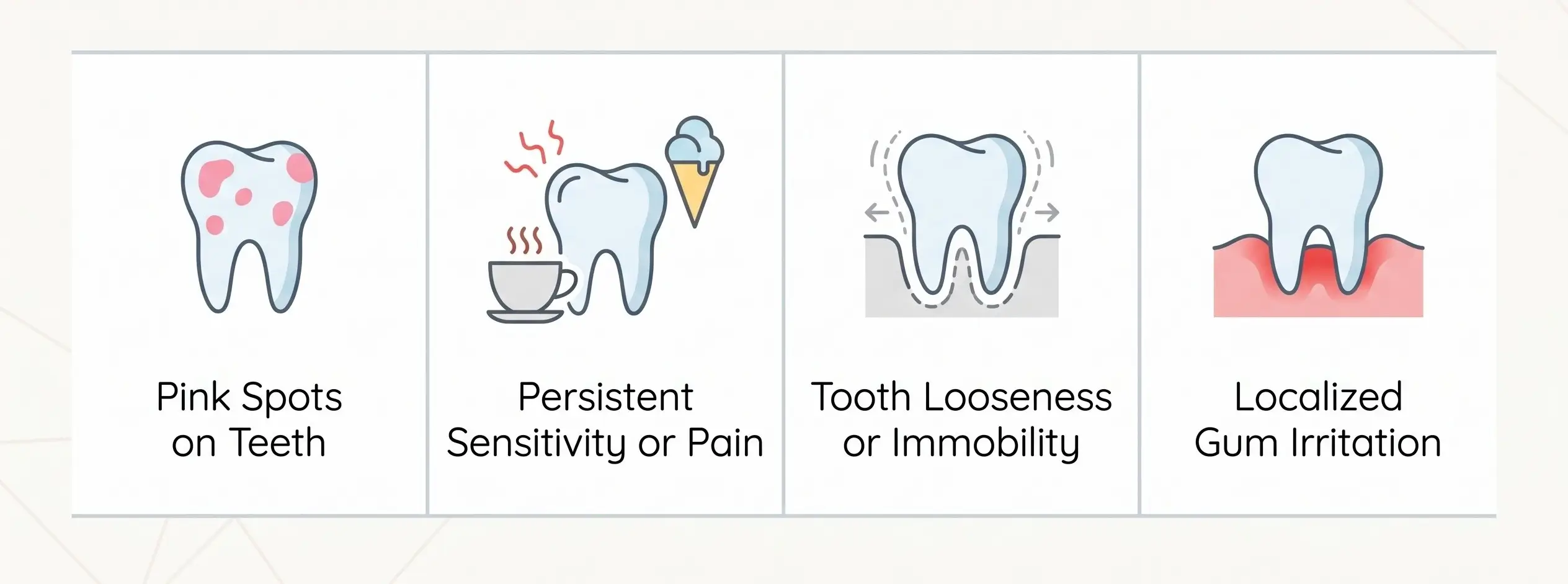
Tooth resorption is notoriously silent in its initial stages. However, as the structural breakdown progresses, key symptoms include:
-
Pink Spots on Teeth: As internal dentin erodes, the pink pulp shows through the enamel (“pink tooth of Mummery”).
-
Persistent Sensitivity or Pain: Discomfort triggered by temperature changes or pressure.
-
Tooth Looseness or Immobility: Depending on whether ligaments are inflamed or fused to the bone.
-
Localized Gum Irritation: Swelling or redness around the affected tooth margin, often accompanied by gum recession, which exposes vulnerable root surfaces to further damage.
Diagnostic Techniques: How Resorption is Detected
Accurate diagnosis requires advanced clinical imaging:
-
Periapical & Panoramic Radiographs: Standard X-rays help spot early radiolucent lesions inside or around the root.
-
3D Cone-Beam CT (CBCT): High-definition 3D scans provide precise cross-sectional views, confirming whether the lesion is internal or external and measuring exact bone density.
-
Pulp Vitality Testing: Thermal and electric tests evaluate whether the inner nerve remains alive.
Modern Tooth Resorption Treatment Options
Treatment depends on the lesion’s location, severity, and remaining tooth structure:
-
Endodontic Treatment (Root Canal): The primary solution for internal resorption. Removing the inflamed pulp stops the resorptive cells and permanently seals the root.
-
Surgical Repair & Biomaterials: For accessible external resorption, minimally invasive surgery cleans the lesion and seals it with biocompatible restorative materials (such as MTA or bioceramics).
-
Extraction and Dental Implants: If the structural integrity is extensively destroyed, removing the tooth and placing a dental implant (supported by bone grafting if needed) prevents adjacent teeth from shifting.
Preventive Measures & Patient Care
While traumatic or idiopathic resorption cannot always be prevented, maintaining proactive oral care significantly minimizes risk factors:
-
Bi-Annual Dental Check-ups: Routine exams catch asymptomatic resorption long before noticeable pain begins.
-
Meticulous Oral Hygiene: Keeping gums healthy prevents deep periodontal pockets and severe inflammation.
-
Custom Mouthguards: Wearing protective guards during sports prevents acute dental trauma.
Partnering with a Specialist for Optimal Tooth Preservation
Ignoring early indicators of tooth resorption can turn a manageable condition into permanent tooth loss. Early diagnosis through precision imaging is the most effective safeguard for natural teeth.
At Golden State Dental Co., our clinical team specializes in advanced restorative endodontics and periodontal care. We pinpoint the exact source of resorption and implement targeted solutions to preserve your smile. Reach out to our team today to schedule an evaluation.
Frequently Asked Questions
1. Can a resorbed tooth be saved?
Yes, if detected before extensive structural destruction occurs. Internal resorption can often be halted completely with prompt root canal therapy, while early external lesions can be surgically repaired.
2. Is tooth resorption painful?
In early stages, tooth resorption is usually painless. Pain, throbbing, and sensitivity typically develop only once the erosion reaches the dental pulp or causes secondary infection.
3. What is the difference between tooth resorption and a cavity?
Cavities are caused by bacterial acid demineralizing the tooth from the outside in. Tooth resorption is a cellular process where the body’s own immune cells absorb dental tissues from either inside the pulp or along the external root surface.
4. Is tooth resorption reversible?
Once tooth structure has been absorbed, it cannot naturally regenerate. However, timely clinical treatment halts the destruction permanently and preserves the remaining tooth structure.
Get More from Golden State Dental Co
Add us as a preferred source to see more of our content on Google Search.
