


Achieving a bright, confident smile is a top priority for many, but navigating the financial side of aesthetic procedures can often feel overwhelming. One of the most common questions patients ask is: Is cosmetic dentistry covered by insurance?
While traditional insurance policies notoriously exclude elective procedures, understanding the nuances of cosmetic dental insurance, the difference between purely aesthetic and medically necessary dental care, and how to successfully manage a cosmetic dentist insurance claim process can save you thousands of dollars.
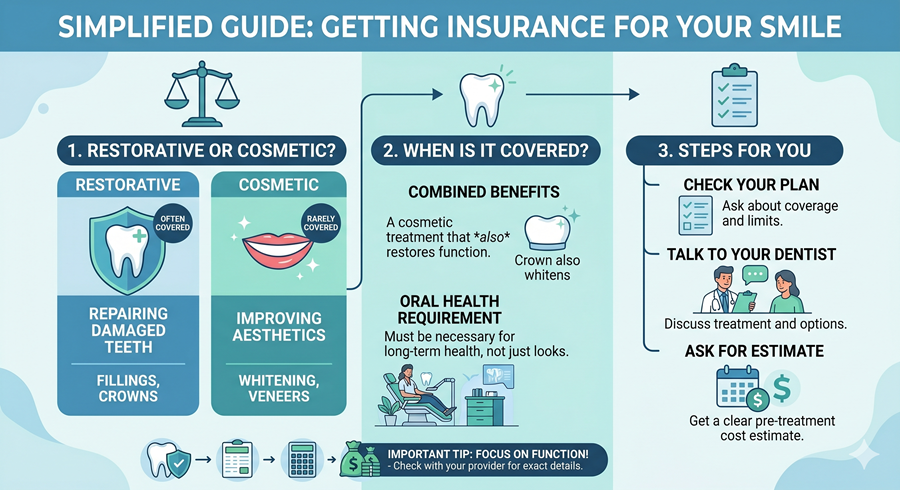
Cosmetic vs. Medically Necessary Dental Care
To unlock any form of coverage, it is essential to understand how insurance providers draw the line between elective aesthetics and medical necessity.
-
Purely Cosmetic Procedures: Treatments done exclusively to improve appearance—such as standard laser teeth whitening, pure gum depigmentation, or designer veneers placed solely for color enhancement—are almost never covered by standard dental insurance.
-
Dual-Benefit (Medically Necessary) Procedures: Many treatments sit in a grey area. For example, if a cracked tooth causes functional impairment and requires a crown or veneer to restore structural integrity, insurance often covers a portion of the cost. Similarly, are dental implants considered cosmetic? While replacing a missing tooth for a gorgeous smile is aesthetic, an implant that restores proper bite alignment and prevents bone loss can frequently qualify for partial cosmetic dental benefits under restorative codes.
Average Costs of Cosmetic Dental Treatments
Understanding the financial scope of aesthetic procedures makes navigating insurance coverage much easier. The average cost varies based on complexity and materials:
-
Teeth Whitening: Typically ranges from $200 to $1,000.
-
Veneers: Often cost between $800 and $2,500 per tooth.
-
Dental Implants: Can exceed $3,000 per implant due to the intricate surgical process.
Because these out-of-pocket costs can add up quickly, knowing how to maximize your cosmetic dental benefits and insurance claims is essential.
Navigating Dental Insurance Plans for Cosmetic Dentistry
Finding dental insurance that covers cosmetic dentistry requires looking beyond basic preventive plans. Here is how you can secure coverage:
-
Specialized Dental Plans: Some progressive providers offer specific cosmetic dental insurance plans or premium tiers that include allowances for veneers, tooth reshaping, or orthodontic aligners.
-
Rider Policies: If your current employer-sponsored plan is too restrictive, you can often purchase a supplemental rider policy dedicated to expanded restorative and aesthetic care.
-
Flexible Spending Accounts (FSAs) and Health Savings Accounts (HSAs): While not traditional insurance, using pre-tax dollars through an FSA or HSA is one of the most effective ways to pay for cosmetic dentistry out-of-pocket without losing money to taxes.
Mastering the Pre-Authorization & Insurance Claim Process
Getting your insurance company to approve an aesthetic-restorative hybrid treatment requires careful planning and documentation. A successful cosmetic dentist pre-authorization involves the following steps:
-
Detailed Clinical Documentation: Your dentist must submit comprehensive notes, periodontal charting, and X-rays proving that the procedure resolves a structural or functional problem alongside improving aesthetics.
-
Filing a Precise Insurance Claim: Submitting accurate diagnostic codes prevents immediate rejections. For instance, classifying a procedure under restorative rehabilitation rather than pure “cosmetic enhancement” drastically increases approval odds.
-
Handling Claim Denials: If your initial claim for a smile makeover or crown lengthening is denied, do not panic. Work with your dental office to file an official appeal with supporting letters detailing the functional necessity of the treatment.
Alternative Ways to Pay for Cosmetic Dentistry
If your insurer outright denies coverage, you still have excellent financial options to make your dream smile a reality:
-
In-House Dental Savings Plans: Many modern dental practices offer membership-based discount plans that bypass traditional insurance caps and waiting periods, offering direct savings on veneers, whitening, and implants.
-
Flexible Monthly Payment Solutions: Third-party medical financing programs allow you to break down the total cost into manageable monthly installments with low or zero interest.
Frequently Asked Questions (FAQs)
1. Does standard dental insurance cover cosmetic dentistry?
No. Standard insurance strictly covers preventive care (cleanings, exams) and basic restorative care (fillings, extractions). However, they may cover treatments that combine health restoration with aesthetic improvements.
2. How can I find dental insurance that covers veneers or implants?
Look for comprehensive or premium-tier individual dental plans, or ask brokers specifically for policies offering major restorative riders that include crown and implant benefits.
3. What is a cosmetic dentist pre-authorization, and why do I need it?
Pre-authorization is a formal agreement from your insurance company before treatment begins, stating what portion of the bill they will pay. It protects you from unexpected out-of-pocket expenses.
Get Expert Guidance on Your Dental Insurance Today
Navigating insurance paperwork shouldn’t stand between you and your ideal smile. At Golden State Dental Co., our experienced team helps patients maximize their benefits, navigate claims, and explore flexible payment solutions for every procedure.
Contact our office today to schedule your consultation and find out how to make your cosmetic dental care as affordable as possible!
