

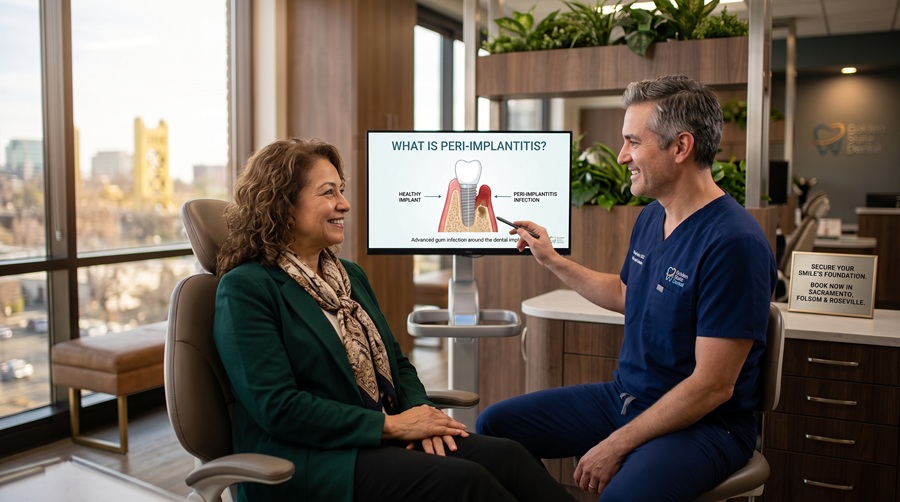
Dental implants are widely considered the most successful, durable solution for replacing missing teeth. However, just like natural teeth, implants require healthy surrounding tissue to stay firmly anchored. When harmful bacteria accumulate beneath the gumline of an implant, it can trigger a destructive inflammatory condition known as peri-implantitis.
If you are experiencing swelling, discomfort, or bleeding around your implant, understanding what peri-implantitis is, recognizing its early symptoms, and seeking prompt peri-implantitis treatment can save your implant and prevent permanent bone loss.
Peri-Implantitis Definition: What Is It?
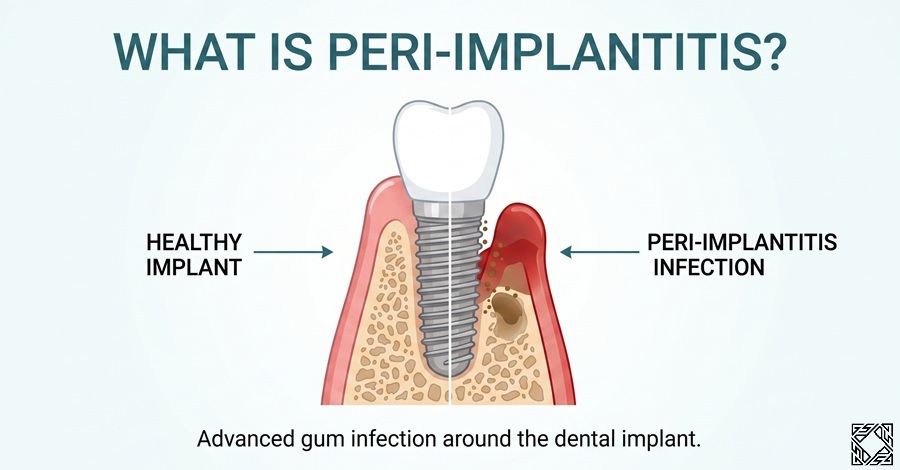
Peri-implantitis is a site-specific, infectious disease that causes inflammation in the soft tissues (gums) and progressive loss of supporting bone around a functioning dental implant.
It differs slightly from peri-implant mucositis:
-
Peri-Implant Mucositis: The early, reversible stage of implant inflammation affecting only the surrounding soft gum tissue (similar to gingivitis around natural teeth).
-
Peri-Implantitis: The advanced, more severe stage where the bacterial infection invades deeper, destroying the jawbone housing the titanium implant post.
Recognized Peri-Implantitis Symptoms
Early detection is the single most important factor in saving an infected dental implant. Key warning signs and peri-implantitis symptoms include:
-
Bleeding or Pus: Redness, bleeding during brushing, or pus discharge around the implant site.
-
Receding Gum Lines: The gum tissue pulls back, exposing the metallic threads or base of the implant post.
-
Persistent Pain or Discomfort: Throbbing pain, tenderness, or a bad taste/odor in the mouth.
-
Swollen or Deep Periodontal Pockets: Gums become loose and inflamed, forming deep bacterial pockets.
-
Implant Mobility: In late-stage cases, the loss of surrounding bone causes the implant to feel loose or unstable.
Main Causes of Dental Implant Infections
A peri-implant infection occurs when oral bacteria form a sticky film (plaque) on the microscopic surface of the implant post. Common risk factors that contribute to this condition include:
-
Poor Oral Hygiene: Inadequate daily brushing or flossing around implant restorations.
-
History of Gum Disease: Patients who previously suffered from severe periodontitis have a higher susceptibility to implantitis.
-
Smoking and Tobacco Use: Nicotine restricts blood circulation, impairing the immune response and tissue healing.
-
Systemic Health Conditions: Uncontrolled diabetes or autoimmune conditions weaken the body’s natural defense against infection.
How to Treat Peri-Implantitis and Save Your Implant
Effective peri-implantitis treatment focuses on eliminating bacterial decontamination from the implant surface while arresting further bone destruction.
1. Non-Surgical Decontamination (Early Stages)
For early-stage infections or mucositis, non-surgical therapy is often sufficient. Your clinician uses specialized ultrasonic instruments, air-polishing tools, and targeted local antimicrobials or antibiotics to thoroughly cleanse the implant surface without scratching the titanium.
2. Modern Laser Peri-Implantitis Therapy
Advanced laser protocols allow periodontists to vaporize harmful bacteria and diseased pocket tissue precisely. Laser light sterilizes the microscopic implant threads while preserving surrounding healthy gums and stimulating cellular healing.
3. Surgical Regenerative Interventions (Advanced Cases)
If significant jawbone loss has occurred, a specialized surgical approach may be necessary. During surgery, the periodontist reflects the gum tissue to decontaminate the implant post thoroughly, then performs guided bone regeneration and tissue grafting to rebuild the lost bone base.
For patients experiencing complex gum or implant complications, undergoing specialized Periodontal Therapy ensures your natural teeth and Dental Implants remain healthy and functional for life.
Peri-Implantitis Treatment vs. Prevention
| Factor / Stage | Non-Surgical Therapy | Surgical / Laser Therapy | Preventive Care |
| Best For | Early mucositis & shallow pockets |
Deep peri-implantitis & bone loss |
Long-term implant maintenance |
| Primary Goal |
Surface plaque removal & disinfection |
Deep sterilization & bone regeneration |
Preventing bacterial accumulation |
| Invasiveness |
Minimal; no incisions |
Micro-surgical access or targeted laser |
Daily brushing, flossing & check-ups |
FAQs
1. Can a dental implant with peri-implantitis be saved?
Yes. When diagnosed early, non-surgical therapy, targeted antibiotics, or laser decontamination can eliminate the infection and halt bone loss.
2. What happens if peri-implantitis is left untreated?
If ignored, the chronic infection destroys the supporting jawbone entirely, leading to painful loosening and ultimate failure of the dental implant.
3. Is peri-implantitis treatment painful?
No. Local anesthesia is applied during clinical decontamination or surgical procedures to ensure a completely comfortable experience.
Protect Your Dental Implants Today
If you notice bleeding, swelling, or discomfort around your dental implant, do not wait. Early expert intervention is the key to preventing implant failure and restoring your oral health.
At Golden State Dental Co., serving Sacramento, Folsom, and Roseville, our periodontists utilize advanced techniques to treat implant infections safely.
Contact our office today to schedule your comprehensive evaluation!
