

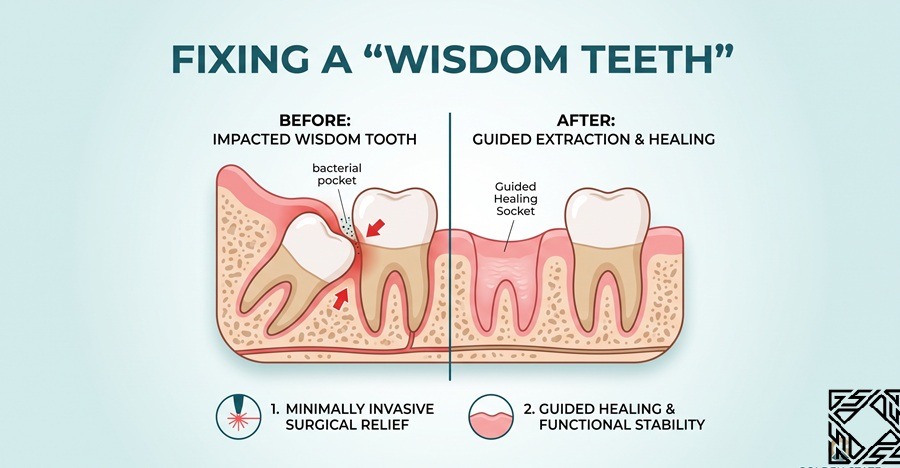
Wisdom teeth or third molars are notorious for making a dramatic entrance. Usually showing up between the ages of 17 and 25, they were helpful to our ancestors who chewed tough roots and raw meat. Today? Our smaller, modern jaws simply don’t have enough room for an extra set of large molars.
When a molar runs out of space to grow normally, it gets trapped under the gums or bone. Dentists call this being “impacted.” While it might start as an annoying ache you try to ignore, leaving it alone can quietly damage neighboring roots, invite persistent infections, and shift teeth you spent years straightening.
At Golden State Dental Co., our goal is to take the mystery and stress out of this milestone so you can protect your oral health without the anxiety.
What Does an “Impacted” Wisdom Tooth Actually Look Like?
An impacted tooth isn’t just stuck; it is trying to find any possible path forward. Depending on the space inside your jaw, it will push in unusual directions:
- Mesial Impaction: The tooth tilts forward, ramming straight into the back of your second molar (the most frequent pattern we see).
- Distal Impaction: The tooth leans backward toward your throat.
- Vertical Impaction: The tooth is standing upright, but the jawbone or thick gum tissue won’t let it emerge.
- Horizontal Impaction: The tooth lies entirely flat on its side, pushing sideways against adjacent roots deep below the surface.
5 Warning Signs You Shouldn’t Shrug Off
An impacted molar can hide quietly for months, but once bacteria find their way into the warm, hard-to-reach pockets around the tissue, your body sounds the alarm.
Watch out for these common impacted wisdom tooth symptoms:
- A Dull, Throbbing Ache: A deep soreness in the back corners of your mouth that creeps into your jawline, neck, or ear.
- Tender, Puffy Gums: The tissue behind your last molars looks fiery red, swells up, or bleeds when you brush.
- Unpleasant Breath or Bad Taste: Food debris easily slips under the gum flap covering the hidden tooth, creating trapped bacteria that mints and mouthwash can’t fix.
- Stiffness When Chewing: You wake up feeling like your jaw muscles are clenched tight, making it uncomfortable to open wide or yawn.
- Sinus Pressure: Upper wisdom teeth sit right under your sinus cavities; when their roots push upward, you might feel unexplained nasal congestion or cheek pressure.
When to Extract Wisdom Teeth: Why Waiting Can Backfire
A common reaction when looking at an X-ray is: “It doesn’t hurt right now, so do I really need to remove it?”
Figuring out when to extract wisdom teeth comes down to preventing bigger headaches down the road. Impacted teeth are prime targets for deep decay because you can’t reach them with floss. Over time, they can form fluid-filled cysts inside the jawbone, dissolving healthy bone and jeopardizing the healthy tooth next door.
Removing them in late adolescence or your early twenties is significantly smoother. The roots are shorter, the surrounding bone is softer, and your body bounces back much faster than it does years down the line.
What Happens During Oral Surgery for Wisdom Teeth?
Hearing the words “oral surgery” often spikes a patient’s heart rate, but modern techniques make the procedure straightforward, gentle, and routine.
- Detailed 3D CBCT Imaging: We start with high-resolution scans to see the exact curve of the roots and their distance from your facial nerves. No surprises.
- Personalized Sedation: You shouldn’t have to white-knuckle through your visit. From laughing gas and calming oral medication to full IV sedation where you sleep through the appointment, we tailor comfort to your needs.
- Gentle Extraction: Your doctor numbs the entire area thoroughly, frees the trapped tooth often dividing it into smaller, manageable sections so the surrounding tissue stays relaxed and places tiny dissolvable stitches to close the site.
Wisdom Teeth Removal Recovery: Your Healing Roadmap
Knowing what to expect over the first week takes the guesswork out of healing:
- Days 1 to 2 (Rest & Soft Foods): Mild swelling and light bleeding are normal. Keep gentle pressure on your gauze, rest with your head elevated, and enjoy cool, smooth foods like yogurt, smoothies, and lukewarm broth.
- Days 3 to 4 (Swelling Peaks, Then Fades): Puffiness usually peaks around day three before settling down. You can start gentle warm salt-water rinses after meals to keep the area clean and calm.
- Days 5 to 7 (Feeling Like Yourself Again): Discomfort drops sharply. You can ease into soft solid foods like scrambled eggs or mac and cheese, and stitches will begin dissolving naturally.
- Weeks 2 and Beyond: The gums close over the area, and your jawbone quietly rebuilds underneath over the next few months.
The Golden Rule: Guard That Blood Clot
The most vital part of your wisdom teeth removal recovery is protecting the protective clot that forms inside the socket. Avoid smoking, vaping, spitting with force, and drinking through straws for at least one full week. Dislodging that clot leads to a painful dry socket a detour easily avoided with a little patience.
Keep Your Smile Healthy and Pain-Free
You don’t have to live with mystery jaw pain or worry about crowded teeth. If you are noticing back-molar pressure or want a clear look at where your third molars are heading, our caring team is ready to help.
Reach out to Golden State Dental Co. today to schedule a consultation and imaging visit at our Sacramento, Folsom, or Roseville locations. We’ll help you take care of your smile before trouble starts.
