

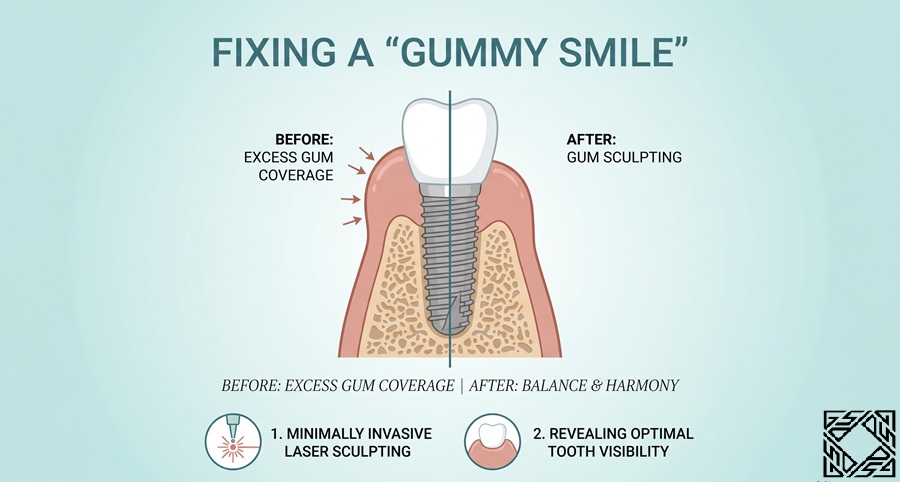
A gummy smile, clinically known as excessive gingival display—occurs when more than 3 to 4 millimeters of gum tissue shows above the top teeth when smiling. While harmless, it frequently impacts self-confidence and overall facial balance. Modern cosmetic dentistry offers targeted surgical and non-surgical treatments to address the exact root cause.
What Causes a Gummy Smile?
Effective treatment depends on diagnosing the underlying cause:
- Incomplete Tooth Eruption: Teeth appear short because excess gum tissue covers the natural enamel.
- Gingival Hyperplasia: Gum tissue overgrowth often triggered by genetics, poor oral hygiene, or specific medications.
- Hyperactive Upper Lip: Muscles pull the upper lip too high when smiling, over-exposing the gum line.
- Skeletal Discrepancies: An overdeveloped upper jaw (vertical maxillary excess) that creates structural imbalance.
Treatment Options: At a Glance
| Treatment | Best For | Procedure Type | Longevity | Recovery Time |
| Laser Gum Contouring | Minor excess gum tissue | Minimally invasive | Permanent | 1–3 days |
| Gingivectomy | Moderate gum overgrowth | Minor oral surgery | Permanent | 3–7 days |
| Crown Lengthening | Short-looking teeth (bone + gum) | Surgical | Permanent | 1–2 weeks |
| Botox® Injections | Hyperactive lip muscles | Injectable | 3–6 months | Immediate |
| Lip Repositioning | Moderate lip elevation | Minor oral surgery | Permanent | 1–2 weeks |
| Orthognathic Surgery | Severe jaw/skeletal misalignment | Major oral surgery | Permanent | Several months |
Selecting the Right Approach
- Underlying Anatomy: If the issue is soft tissue, laser shaping or a gingivectomy is ideal. Skeletal concerns require orthodontic or orthognathic intervention.
- Invasiveness vs. Permanence: Botox offers an instant, needle-only fix without downtime, but requires maintenance 2 to 3 times per year. Surgical contouring offers a permanent, one-time solution.
- Cost & Coverage: Purely cosmetic procedures (contouring, Botox) are out-of-pocket, whereas medically necessary corrective jaw surgeries may qualify for partial insurance coverage.
- Digital Diagnostics: Modern practices use AI-assisted digital smile design (DSD) to preview post-treatment results before starting any procedure.
Frequently Asked Questions
How do I know which gummy smile treatment I need?
A comprehensive exam with a periodontist or cosmetic dentist determines whether the cause is tooth position, excess gum tissue, muscle movement, or jaw structure.
Is laser gum contouring painful?
The area is completely numbed with local anesthesia. Because lasers seal blood vessels and nerve endings instantly, post-procedure discomfort and bleeding are minimal.
How does Botox fix a gummy smile?
Targeted injections temporarily relax the levator labii superioris muscles, preventing the upper lip from rising too high above the teeth when smiling.
How long is recovery after crown lengthening?
Most patients resume normal activities within 48 hours, though complete soft-tissue healing takes roughly one to two weeks.
